Does Guided Sleep Audio Actually Work? What the Research Shows
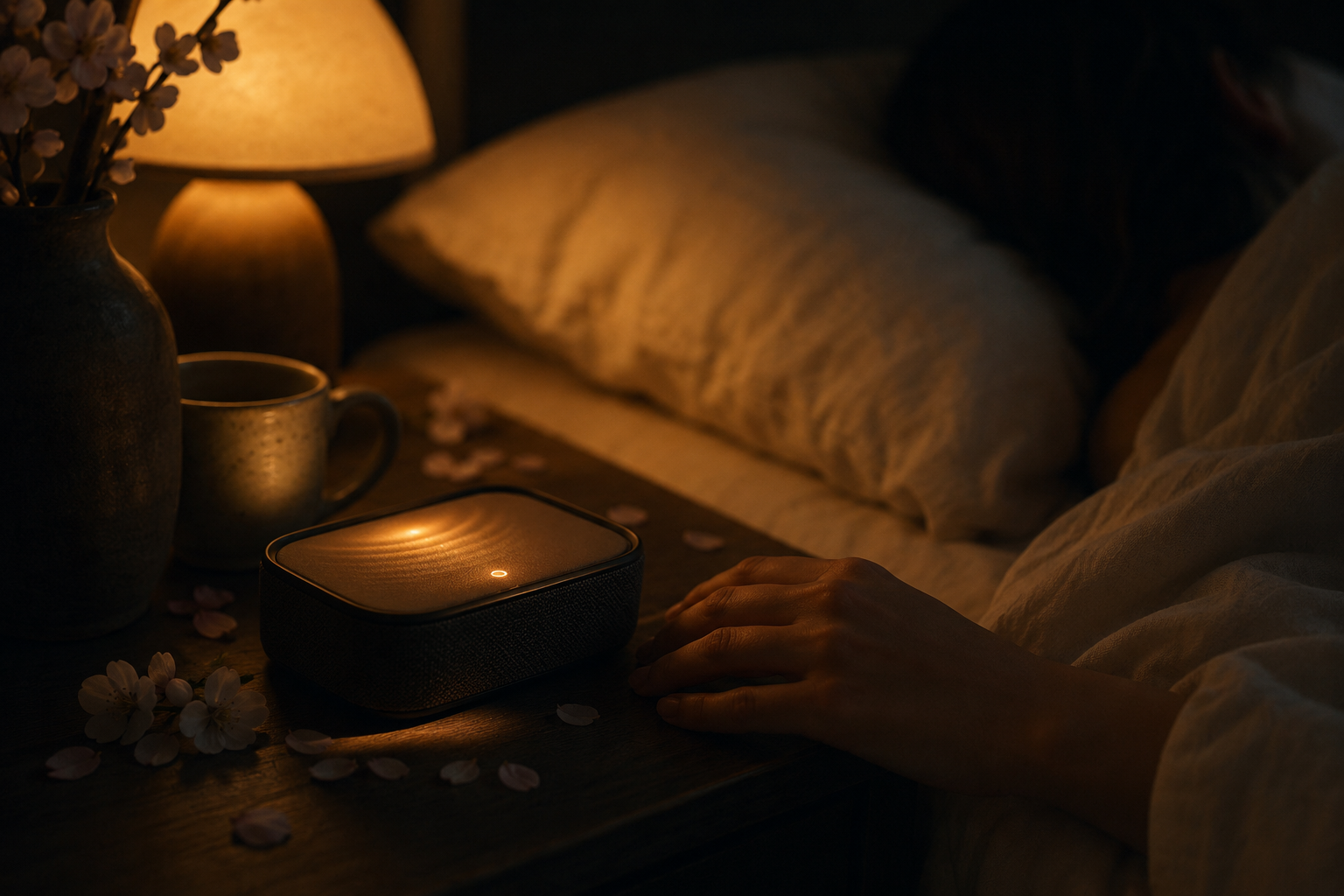
Your sleeping brain might be listening more closely than anyone assumed.
In a 2024 sleep lab study, researchers at the University of Liège and the University of Fribourg played relaxing words and neutral words to sleeping participants and tracked their heart rate. Heart rate slowed more after the relaxing words than after the neutral ones.
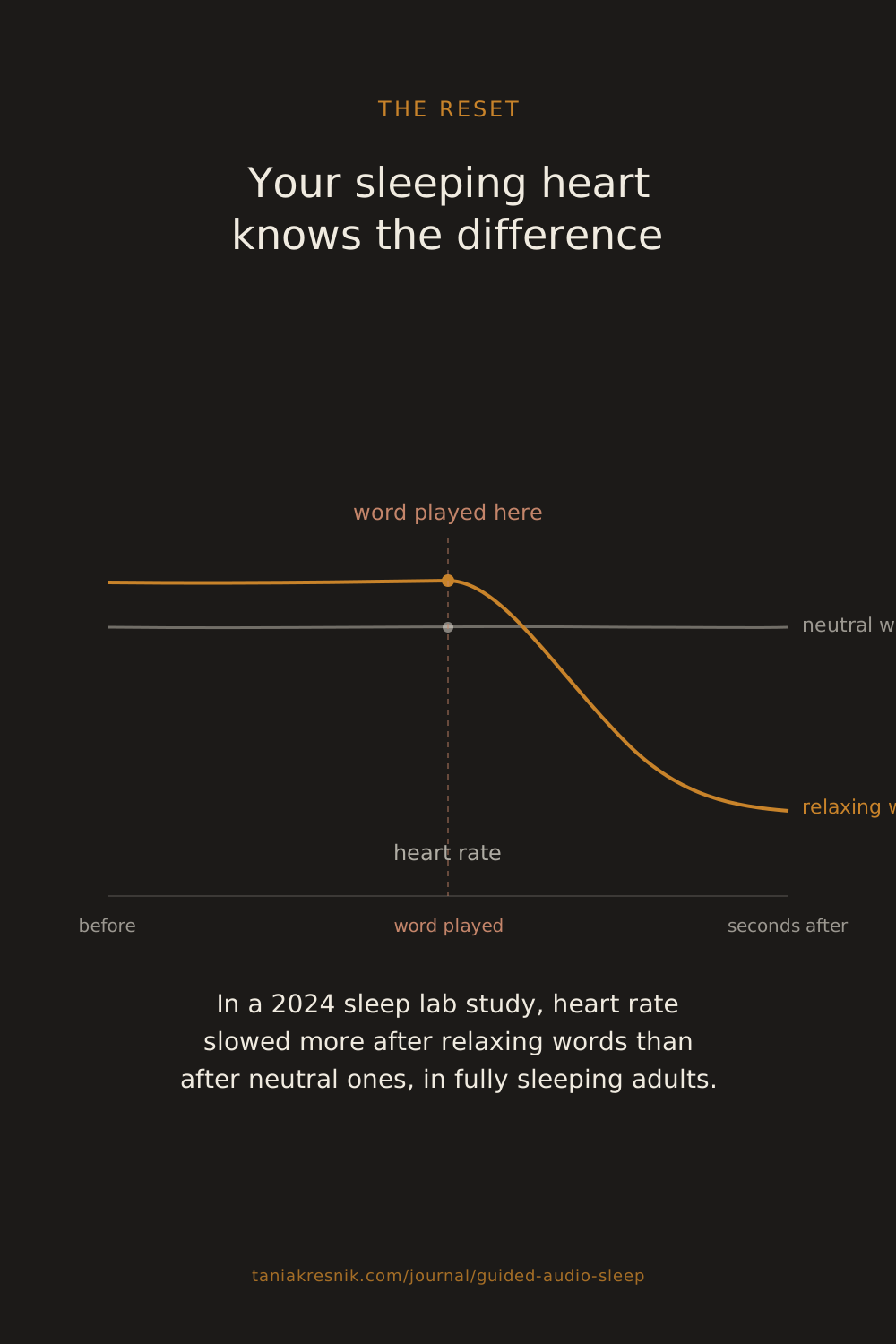
That doesn't prove every guided sleep recording improves sleep. It shows something narrower, and still worth knowing: the sleeping brain isn't entirely closed off from meaning, and the body can respond differently to words carrying different emotional weight, even while you're fully under.
Earlier work from the same research group found relaxing words played during NREM sleep increased time spent in slow-wave sleep and shifted certain slow-wave brain activity measures, both markers linked to deeper sleep.
What this does, and doesn't, tell us about guided audio
These experiments didn't test a full-length recording like The Midnight Reset. They tested isolated words, played at specific points in the sleep cycle, in a lab. Worth separating three different situations: words played during sleep already underway, a voice guiding you toward sleep in the first place, and audio meant for a 3am waking specifically. The research above speaks mainly to the first.
What it supports is more modest than "guided meditation works" and more interesting than nothing: meaning doesn't fully shut off when you do.
A voice isn't the only option
A 2023 randomized pilot study put 300 adults with sleep difficulties into two groups: one listened to narrated sleep stories, the other to ambient sound with no narration. Both groups reported meaningful improvement in sleep over four weeks. The study had no no-audio control group, so it can't tell us how much of that improvement came from the recordings themselves, from expectation, from a new bedtime habit, or simply from time passing.
It also didn't establish that a voice beats ambient sound, or the reverse. Some listeners want narration. Others find a voice, even a calm one, slightly more engaging than they want at the edge of sleep, and do better with sound alone. Neither preference is wrong.
Attention is one likely mechanism, not the only one
For someone lying awake with racing thoughts, part of the benefit is probably attentional. A voice gives the mind a structured, low-effort place to go. That's often easier than trying to suppress a thought, which tends to create more monitoring and effort, not less.
This is also why "clear your mind" can be frustrating advice at 3am. Most evidence-based meditation practices don't actually ask for an empty mind. They give attention a repeated anchor and teach a different response when a thought pulls focus back.
Attention is probably not the whole mechanism either. Slower breathing, reduced stimulation, a repeated bedtime cue, and the sleep-stage word processing above may all play a part, in different combinations for different people.
What the broader evidence for digital meditation supports
A 2025 review in American Psychologist pulled together 45 randomized trials on meditation apps and found real but modest effects on anxiety and depression symptoms. Those effects were often stronger when an app was compared with doing nothing than when compared with another active approach, a meaningful methodological distinction. This is app research broadly, not guided sleep audio specifically, and it doesn't tell us which feature (voice, instruction, repetition, or simply time spent disengaging from a screen) drives the result.
Real-world engagement with meditation apps is often low, and many people stop using them early. How early varies widely depending on whether someone paid for it, chose it themselves, or was part of a structured study with reminders built in.
The Midnight Reset isn't a subscription app chasing a daily streak. It only needs to be easy to find and familiar enough to reach for on the nights the pattern comes back.
A quick note on playing audio through the night
Keep the volume low. A sleep timer helps if you don't want it running for hours. Skip uncomfortable in-ear headphones for overnight use. Audio should never be loud enough to mask an alarm, a child, a medical device, or another sound you need to hear. If you deal with tinnitus, sound sensitivity, or headaches, choose a playback method that works for your ears specifically, and check with a doctor if you're unsure.
What The Midnight Reset does differently
Most guided sleep audio assumes you need calming. The Midnight Reset starts from a different assumption: you're an intelligent adult who wants to understand what's happening in your body before being guided through a response to it.
Part 1 is the mechanism, 12 to 15 minutes on what your nervous system is doing at 3am. The cortisol timing, the hyperarousal pattern, the unprocessed thought that surfaces when daytime noise drops away. Not to diagnose. To make the experience recognizable instead of frightening.
Part 2 is the practice: breathwork that slows your exhale, a body scan that invites each part of you to soften rather than tense and release, a warmth visualization drawn from autogenic training, and a closing practice that lets racing thoughts pass instead of fighting them. The four work together on your nervous system's arousal response, whatever set it off tonight. Hormones, stress, an anxious thought that wouldn't quit. The mechanism keeping you awake is largely the same, so the practice doesn't need to diagnose the cause to help you settle.
You can listen to the full guide once to understand the mechanism, then use Part 2 directly on later nights. The timestamp sits in the file description, so you don't have to search for it in the dark.
If tonight is one of those nights, it's here: The Midnight Reset.
If you want to understand why you wake in the first place, the post on the 3am mechanism covers the science in full.
References
This post is for informational purposes only and does not constitute medical advice. Guided audio can be a useful self-help tool, but persistent insomnia, breathing-related awakenings, severe anxiety, or significant daytime impairment should be discussed with a qualified healthcare provider.